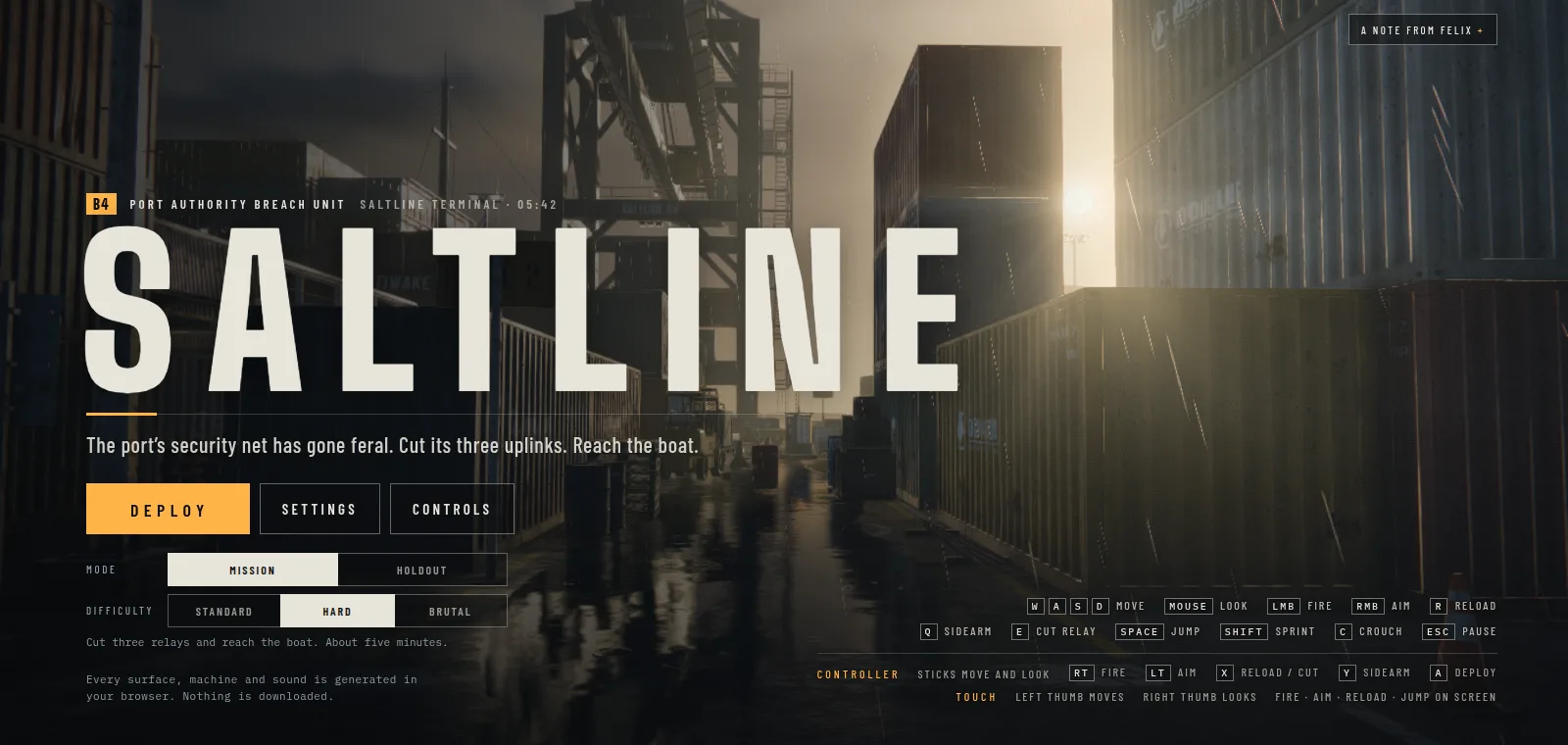
The Saltline prompt, as shared
Shortly after posting the game, Felix Rieseberg replied with the instruction he had given Claude Fable 5.2, adding that he was "slowly discovering that the age of prompt engineering is basically over":
"You know, you should also build me a FPS. Insanely detailed quality pls, something that looks visually like it can keep up with AAA. Make it small in scope (like a tiny level) but otherwise impressive photorealistic graphics"
Felix Rieseberg on X, November 9, 2026. Original post.
He also noted that his claude.md was empty. That is the instruction file Claude Code loads at the start of a session, so no stored project rules shaped the result. In his launch post he described the goal as testing "Fable 5.2's quality with one-shot prompts without human feedback."
Reading the Saltline prompt line by line
"You know, you should also build me a FPS"
The word also matters. Earlier that day Felix had asked the model for a batch of smaller games, so this line reads like a follow-up in a running conversation rather than a cold start. It names the genre and nothing else: no setting, no story, no weapons, no enemies. The container port, the relays, the boat and the Gulls and Hounds were all the model's choices.
"Insanely detailed quality pls, something that looks visually like it can keep up with AAA"
This is the quality bar, and it is entirely about looks. It points the model at lighting, materials and atmosphere, which is exactly where Saltline is strongest: wet asphalt, rain streaks and low sun through the cranes. It says nothing about gameplay depth, which is where the critics focused.
"Make it small in scope (like a tiny level)"
The most useful line in the prompt. Asking for one tiny level lets the model spend its effort on making one space look good instead of spreading it across a campaign. The result is a run of about five minutes, and that short length is a direct consequence of this sentence.
"but otherwise impressive photorealistic graphics"
The prompt ends by restating the visual goal. Photorealism in a browser means generating textures, models and sound procedurally, since no asset files were supplied. Felix says everything in the game was made from scratch by the model.
What the prompt leaves out
- The tool and settings. Felix did not say which tool ran the eight-hour session, which effort setting it used, or whether fast mode was on.
- The earlier conversation. The word also implies earlier turns. Whatever context they gave is not in the shared text.
- The run itself. About 445 million input tokens and 2.7 million output tokens over roughly eight hours. A single prompt started it, but a long agent loop of writing, testing and fixing did the work.
- The later edits. The version on the official page today includes about two hours of improvements by Felix. The original one-shot build is still playable.
The numbers behind the run are broken down on how Saltline was made.
Why the Saltline prompt caused an argument
Supporters read the prompt as proof that detailed prompt engineering matters less with stronger models: a casual two-sentence request produced something that looks like a commercial shooter. Skeptics argued that calling it "one prompt" undersells the eight hours of autonomous work, and warned that people who paste the same words into a chat window will get a far weaker game and blame the model. Both sides are describing the same facts. The prompt is short; the process it started is not.
Using the Saltline prompt yourself
You can reuse the structure of the prompt for your own game: name the genre, set the quality bar in visual terms, and keep the scope deliberately tiny. A few changes make it work better in practice:
- Pick your own setting so you do not end up with a copy of Saltline: a rooftop, a mine, a ferry, a greenhouse.
- Say that all assets must be generated in code, with no external files, so the result runs as a single page.
- Give the model room to iterate. An agent that can run, test and fix its own code over many steps will get much closer to Saltline than one chat reply.
- Play the result, then ask for specific fixes. Felix's own two-hour polish pass shows that a little human feedback still helps.
A step-by-step version is on how to make a game with Claude.
See what the prompt produced
Play the game, then open the one-shot version from the note on the title screen to compare.